


Domènec Spain, 1962
Y la tierra será el paraíso, 2018
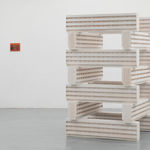
Fourteen wooden forming a structure, two archival pictures printed and mounted on dibond and installation of nineteen photographs printed on black PVC.
Wooden model, 120 x 28 x 15 cm, each. Structure, 120 x 120 x 197 cm. Archival pictures, 70 x 52 cm and 33 x 26 cm, each.
Printed photographs, variable measurements. Wall installation, 400 x 168 x 8 cm
Printed photographs, variable measurements. Wall installation, 400 x 168 x 8 cm
Más imágenes
-
(View a larger image of thumbnail 1
)

-
(View a larger image of thumbnail 2
)
-
(View a larger image of thumbnail 3
)

-
(View a larger image of thumbnail 4
)

-
(View a larger image of thumbnail 5
)

-
(View a larger image of thumbnail 6
)

-
(View a larger image of thumbnail 7
)

-
(View a larger image of thumbnail 8
)

-
(View a larger image of thumbnail 9
)

-
(View a larger image of thumbnail 10
)

These models represent the gigantic social housing projects of La Mina, a neighbourhood located in the limits of Barcelona, constructed at the end of the sixties to relocate the population...
These models represent the gigantic social housing projects of La Mina, a neighbourhood located in the limits of Barcelona, constructed at the end of the sixties to relocate the population coming from different shanty towns. Two archival photographs are shown next to the sculpture; one, from 1970, shows the dictator Franco and the mayor of Barcelona posing next to the model of La Mina neighbourhood project. Another one, shows a couple of gypsy women, relocated in this same neighbourhood, holding the model of their shack at Camp de la Bota, built by themselves with cardboard. Once again, we see the image of power presenting itself as the leader of the population through large construction campaigns, in front of the image of the most disadvantaged classes of society, which take over the urban space making use of all the resources they find at their reach.
The project is Y la tierra será el paraíso includes a photographic series showing polygons of large social housing buildings. Domènec, who has taken these snapshots in cities far from each other such as Barcelona, Warsaw, Bratislava, Marseille, Nantes, Empuriabrava and Mexico City, shows the images without indicating their origins. In this way, he highlights the way in the existence and aesthetics of these buildings, located all in big cities’ peripheries, as a sign of harmful globalization and state control that relegates the marginalized of capitalism to the margins of the city, limiting their social mobility.
The project is Y la tierra será el paraíso includes a photographic series showing polygons of large social housing buildings. Domènec, who has taken these snapshots in cities far from each other such as Barcelona, Warsaw, Bratislava, Marseille, Nantes, Empuriabrava and Mexico City, shows the images without indicating their origins. In this way, he highlights the way in the existence and aesthetics of these buildings, located all in big cities’ peripheries, as a sign of harmful globalization and state control that relegates the marginalized of capitalism to the margins of the city, limiting their social mobility.
12
de
17